How AI-Governed Logistics Platforms Are Redefining Last-Mile Delivery in 2026
Why Last Mile Keeps Breaking
What Changes With an AI Logistics Platform
The change here is The route is seen as something alive by an AI logistics platform, constantly adjusting it as new information comes in, rather than a static plan that is built once and followed blindly. Traffic shifts, a customer reschedules, a driver calls in sick, and the system recalculates, instead of waiting for a dispatcher to notice and fix it manually 3 stops too late.This is where last mile delivery software earns its keep. Good systems now predict delivery windows accurately enough that customers stop hovering over a tracking app, because the estimate given at nine in the morning still holds at four in the afternoon. That kind of reliability used to be a luxury reserved for a handful of massive retailers. It's now something mid-size logistics operators expect out of any serious platform, and rightly so.
Automating the Parts Nobody Wants to Do Manually
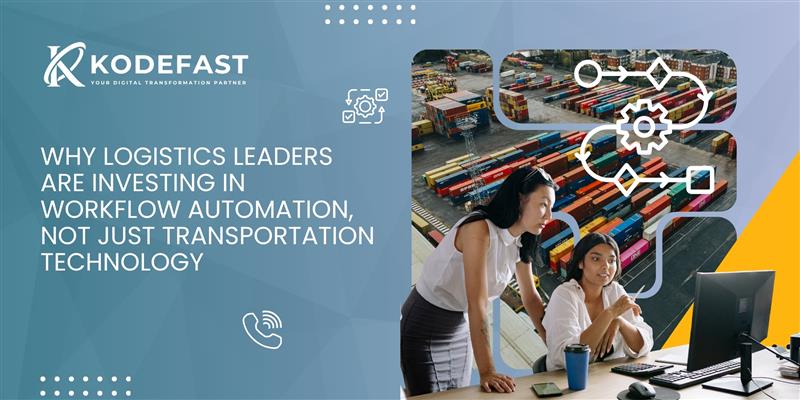
A lot of what makes logistics slow isn't the driving at all. It's the paperwork, the manual dispatch adjustments, the endless phone calls confirming that a truck actually left the depot on schedule. Logistics automation solutions exist specifically to strip that layer of friction out, handling the coordination work that used to eat up a dispatcher's entire morning.Logistics workflow automation takes this further by connecting the pieces that never used to talk to each other. A delayed shipment at the warehouse should automatically adjust downstream delivery estimates without someone manually updating three different systems. A driver running behind should trigger a customer notification without a human remembering to send it. None of this is glamorous work, but it's exactly the kind of friction that quietly costs logistics companies real money every single week.
Fleet Management That Actually Thinks Ahead
Smart fleet management systems have moved well past GPS dots on a map. Modern systems track vehicle health, predict maintenance needs before a breakdown strands a truck mid-route, and factor driver behavior into route planning in ways that used to require a human dispatcher's gut instinct. A truck that's about to need service gets pulled from the high-priority routes automatically. A driver who tends to run efficient routes in certain neighborhoods gets matched to more of them.None of that obviates the need for people to run the operation. It means less surprises, less emergency reroutes, less calls at 11 p.m. because a truck broke down 40 minutes from the depot.
Custom Builds vs. Off-the-Shelf Platforms
Plenty of vendors sell enterprise logistics software as a one-size-fits-all package, and for some operators that's genuinely fine. But logistics operations differ enormously depending on what's being moved, how many stops per route, what the customer base expects, and how tight the margins actually are. Custom logistics software development exists for the operators who've outgrown the generic dashboard and need something built around their actual freight, their actual routes, their actual customer promises.This is usually where the real gains show up. A generic platform gets you maybe sixty percent of the efficiency available. A system built around the specifics of how a company actually moves goods tends to close that remaining gap, and that gap is often where the real profit was hiding the whole time.